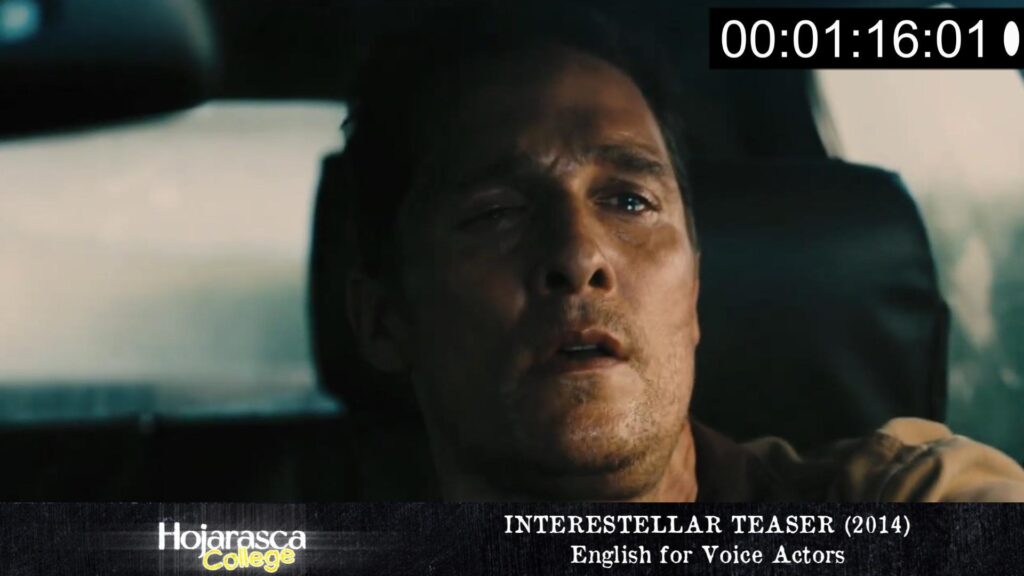
The Interstellar teaser shows a powerful idea about how humans think and feel when facing big challenges. From a psychological perspective, it reminds us that people naturally want to explore, discover, and push limits. It explains how, throughout history, humans have celebrated moments when they achieved things that once seemed impossible, like flying faster than sound or reaching space. These victories gave people hope and inspired entire generations to dream bigger.
However, the teaser also shows a shift in mindset. It suggests that society may have become afraid of risks or too focused on surviving day-to-day problems, causing people to forget their adventurous spirit. Psychologically, this reflects how fear, uncertainty, or difficult circumstances can make individuals and societies stop dreaming and aim lower, even if they are capable of more.
Scene Library
VER TODO / ENGLISH / MOTIVATIONAL / FANTASY / FREE / TRAINING SPEECH / WOMENS / KIDS / DUBBING SCENE / LOVE / COMEDY / SPORT
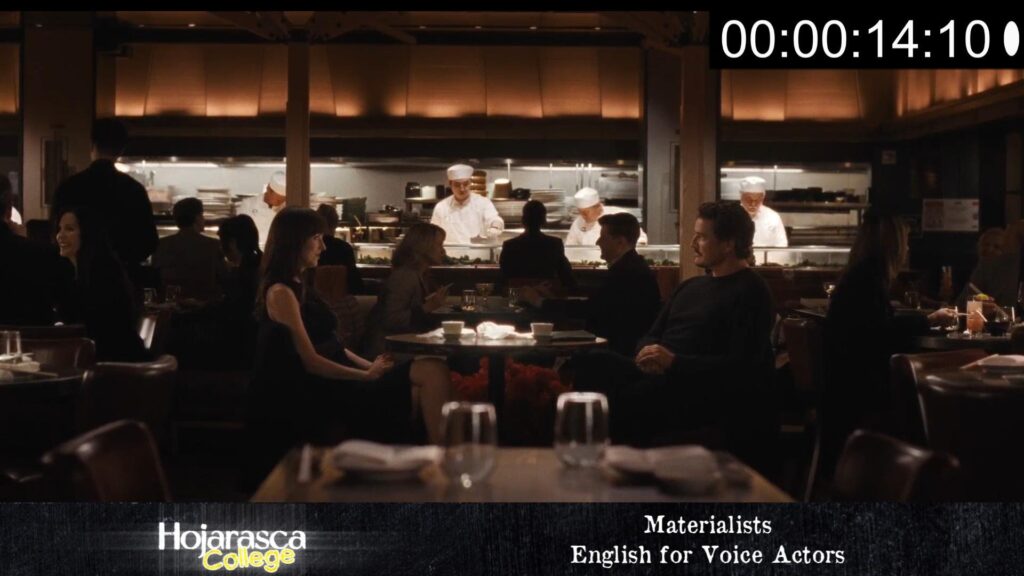
In this scene from Materialists, Lucy and Harry have a conversation that seems romantic on the surface, but is actually more like a duel of ideas about love, personal worth, and fear of the future.
Lucy shows a very rational way of thinking, and even a bit of harshness toward herself. She analyzes her relationship as if it were a mathematical equation: she talks about her age, her appearance, her financial situation, and her past, believing that all of this defines how much she is “worth” as a partner. This reflects a deep insecurity and a fear of not being enough—something many young people feel when they compare their lives to social standards or expectations of success.
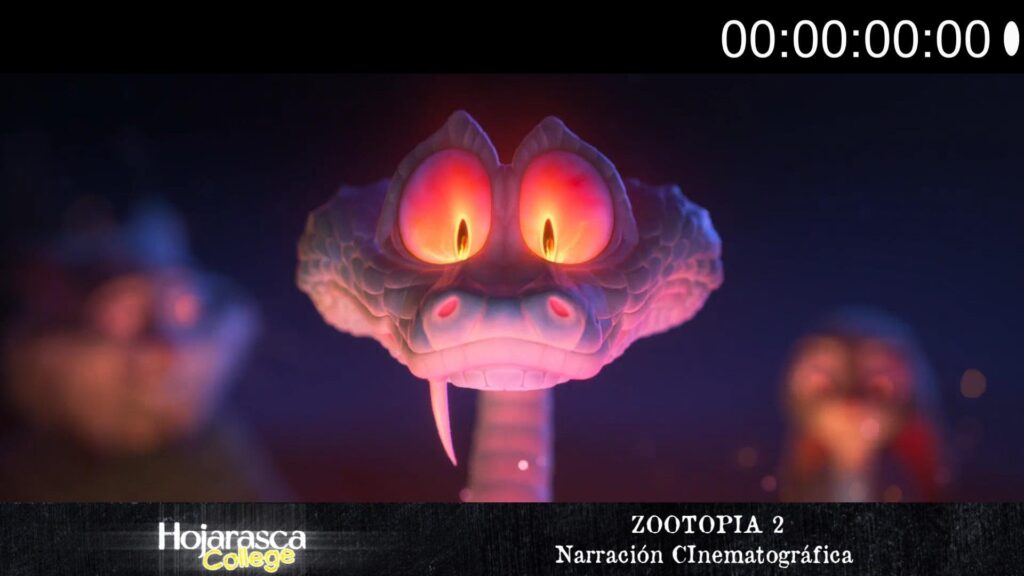
In this fragment, Pawbert reveals a secret that completely changes the story of Zootopia: the city was not born from the idea of a famous mammal, but from a visionary snake — Gerry’s great-grandmother — who dreamed of a place where all animals could live together without fear or barriers. This shows us something powerful: often the best ideas come from those who have been underestimated.
She created the climate walls so that each species could live comfortably. Her motivation was not money or fame, but inclusion. But here the darker side of the human (or animal) mind comes into play: misdirected ambition. Pawbert’s great-grandfather saw economic potential, not purpose. Greed led him to betray, lie, and commit a crime to take the credit for himself. It’s the classic clash between purpose and ego.
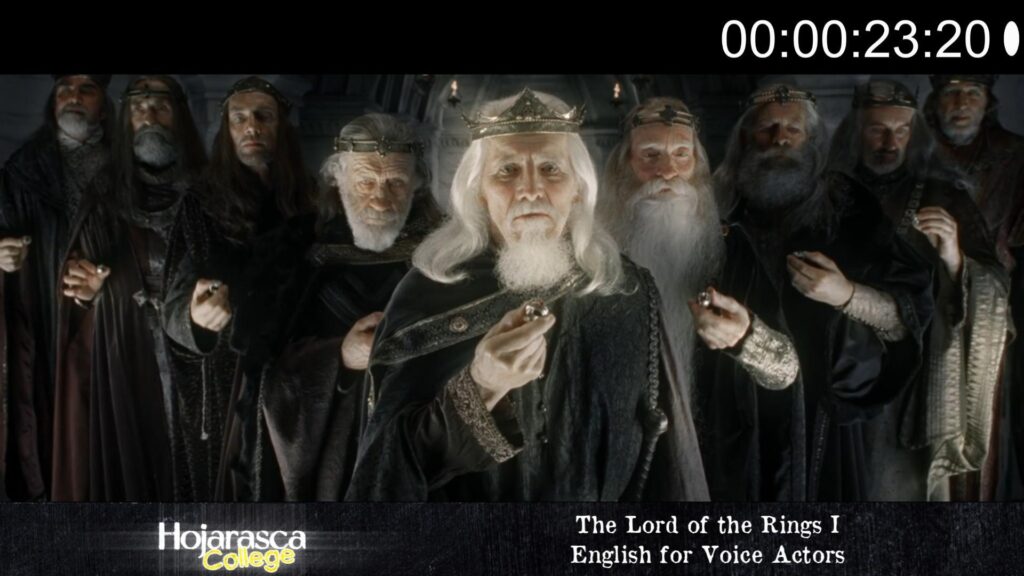
In this scene from The Lord of the Rings: The Fellowship of the Ring, we are not only told an epic legend; we are also confronted with a brutally human question: is it worth living forever if you are not free?
The Rings were created as powerful gifts for Elves, Dwarves, and Men, each one appealing to their deepest desires: wisdom, wealth, power. But Sauron, in secret, forges the One Ring, imbued not only with magic, but with his own will to dominate. Psychologically, this Ring functions as an extreme temptation: it promises control, greatness, and even a longer life… but in exchange, it steals who you are.
Rafiki, with his playful and mysterious way of speaking, acts as a kind of emotional guide. He understands that Simba is trapped in fear and uses a very simple but powerful lesson: the past can hurt, yes, but it doesn’t have to control you. When Rafiki hits Simba and then tells him that it’s already in the past, he shows him that dwelling on pain changes nothing. What matters is deciding what to do next.
This scene is about growth. Simba begins to understand that avoiding the past doesn’t make it disappear. On the contrary, facing it and learning from it is what will allow him to move forward. Rafiki doesn’t deny the pain, but he teaches that pain can also be a teacher.
The letter speaks about attachment and the fear of losing those we love. Hopper wants to freeze the moment, to turn back the clock, because change hurts. However, it also shows great emotional maturity in accepting that life moves forward, even when it’s frightening. He acknowledges that pain is not always bad: feeling it means you are no longer empty, that you are alive.
The final message is powerful and very timely: growing up means making mistakes, feeling sadness, joy, and fear, but also learning. Hopper doesn’t ask Eleven not to change, only not to close the door completely. That open door is a symbol of trust, communication, and unconditional love.
The grief over her sister didn’t only leave pain; it left unanswered questions. In trying to fill that void with work and constant action, she falls into what many experience today: a functional routine lacking emotional meaning. Her final phrase, “without a purpose I’m adrift, like a river,” illustrates the identity crisis she is going through.
We also see signs of emotional exhaustion, where performance doesn’t compensate for the lack of inner connection. Black Widow, a symbol of strength, here appears vulnerable and human—reminding us that true strength isn’t pushing forward without feeling, but pausing to understand what we feel.
This funny and touching scene speaks to us about empathy, commitment, and how children also possess deep values.
In his powerful speech at the inaugural Laureus World Sports Awards in Monaco, Nelson Mandela declared that “Sport has the power to change the world.”
Jessica Chastain’s speech at the American Cinematheque, framed as a lyrical story titled "Once Upon a Time".
In her powerful WE Day speech, Kate Winslet shares a deeply personal story of her struggle with self-esteem and bullying during her teenage years.
Benedict Cumberbatch delivers a heartfelt letter from poet Ted Hughes to his son Nicholas. The letter offers deeply personal insights into life, identity, and the inner battles we face as human beings.